
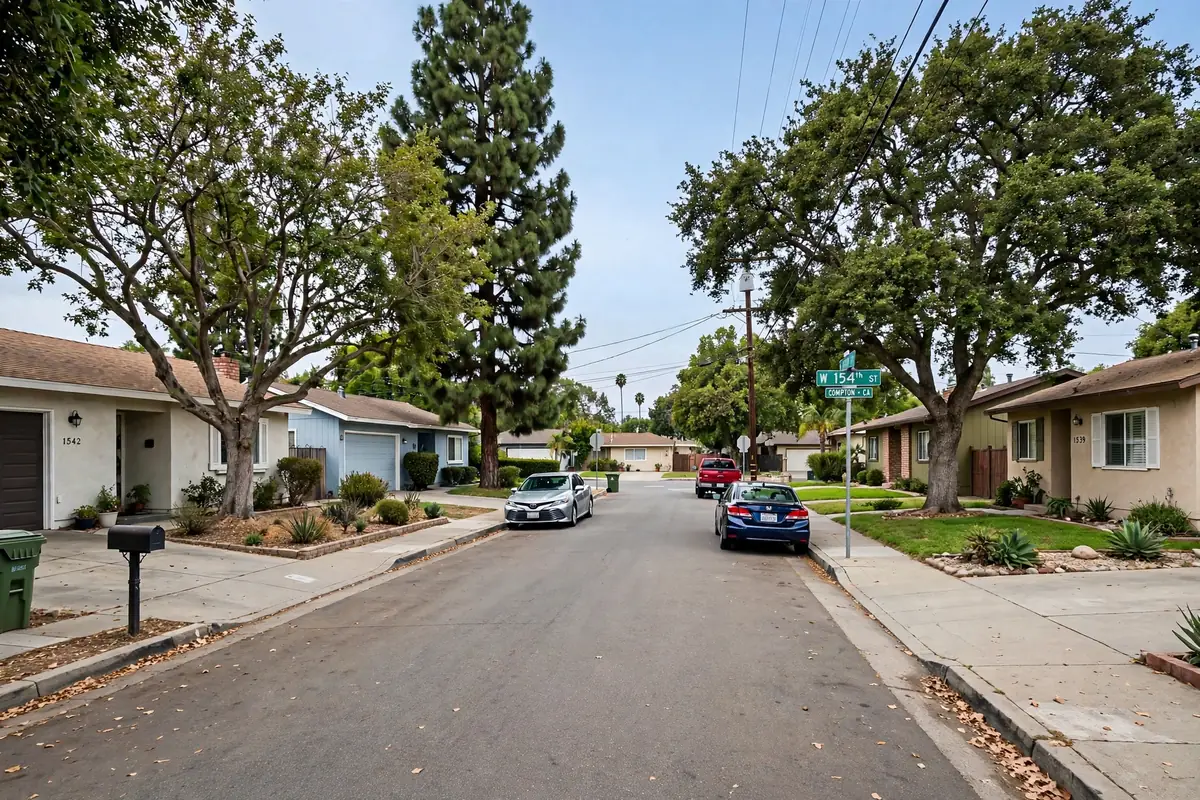
Single Story Compton Homes Built From the 1940s to 1960s
The Compton housing stock tells a postwar story: block after block of single story homes built from the 1940s to 1960s, practical houses on modest lots that have sheltered generations. Their plumbing was standard for the era, galvanized steel for supply and cast iron for drains, installed when both materials were expected to serve for decades.
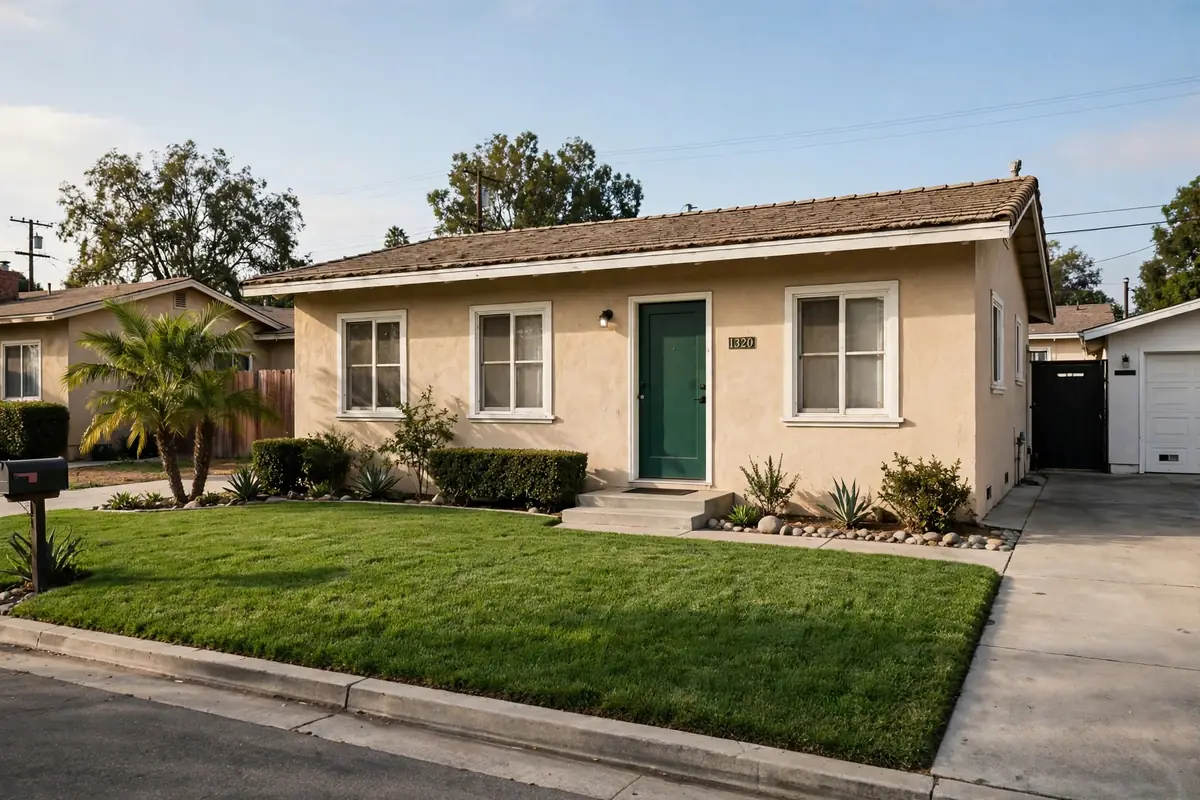
Those decades have now fully elapsed. Galvanized lines in Compton homes have corroded inward until many run at a fraction of their original capacity, and cast iron drains have scaled and thinned along their bottoms. The systems still work, in the sense that water flows, but they operate with no reserve left for the next weak point.
Many of these homes have also been added onto over the years: a converted garage, an extra bathroom, a laundry moved indoors. Each addition tied new fixtures into old pipe, and the junction between eras is often where trouble starts. We map those junctions during inspections so repairs address the true weak links.
Compton Creek, City Hall, and the Neighborhoods Between
Compton Creek runs through the city as both a waterway and a dividing landmark, with neighborhoods spreading east and west of its concrete channel. Near the center, City Hall and the Martin Luther King Jr. monument anchor the civic core, and the Compton Golf Course gives the city one of its green landmarks along the creek side.
Residential Compton is a grid of long lived neighborhoods where many homes have remained in families for decades. That continuity means plumbing histories are long too: the same galvanized system may have been patched by three different hands over thirty years, with no single record of what was changed and what was left alone.
Our job on a first visit is partly detective work. We trace what the home actually has, test pressure, run the drains, and build the picture that decades of small repairs never documented. Compton homeowners deserve that clarity before anyone recommends major work.
Aging Cast Iron Drains Under Compton Floors
Cast iron drain pipe fails in a characteristic way: the top of the pipe often looks fine while the bottom, where wastewater flows and sits, corrodes through. Scale and rust build rough ridges inside the channel, catching toilet paper and waste until a line that drained for years begins clogging every few months.
Because the damage hides inside the pipe, drain cleaning alone becomes a treadmill. The cable opens a hole through the blockage, the line drains, and the rough channel catches the next load. A camera inspection breaks the cycle by showing the actual condition: how much scale, where the pipe has thinned, and whether cracks have started.
Hydro jetting gives cast iron its best second life. High pressure water scours the scale from the pipe walls and restores the full channel, and when the iron itself is still thick enough, a jetted line can serve well for years. When the camera shows the bottom rotted through, we explain replacement for that section in plain terms.
Burst Lines and Backups: Compton Calls We Answer Most
Two call types dominate in Compton. The first is the burst galvanized supply line, usually at a fitting inside a wall or under the home, announcing itself with running water sounds, falling pressure, and wet drywall or flooring. The second is the sewer backup, where a scaled cast iron drain or a rooted lateral finally closes and waste returns through the lowest fixture.
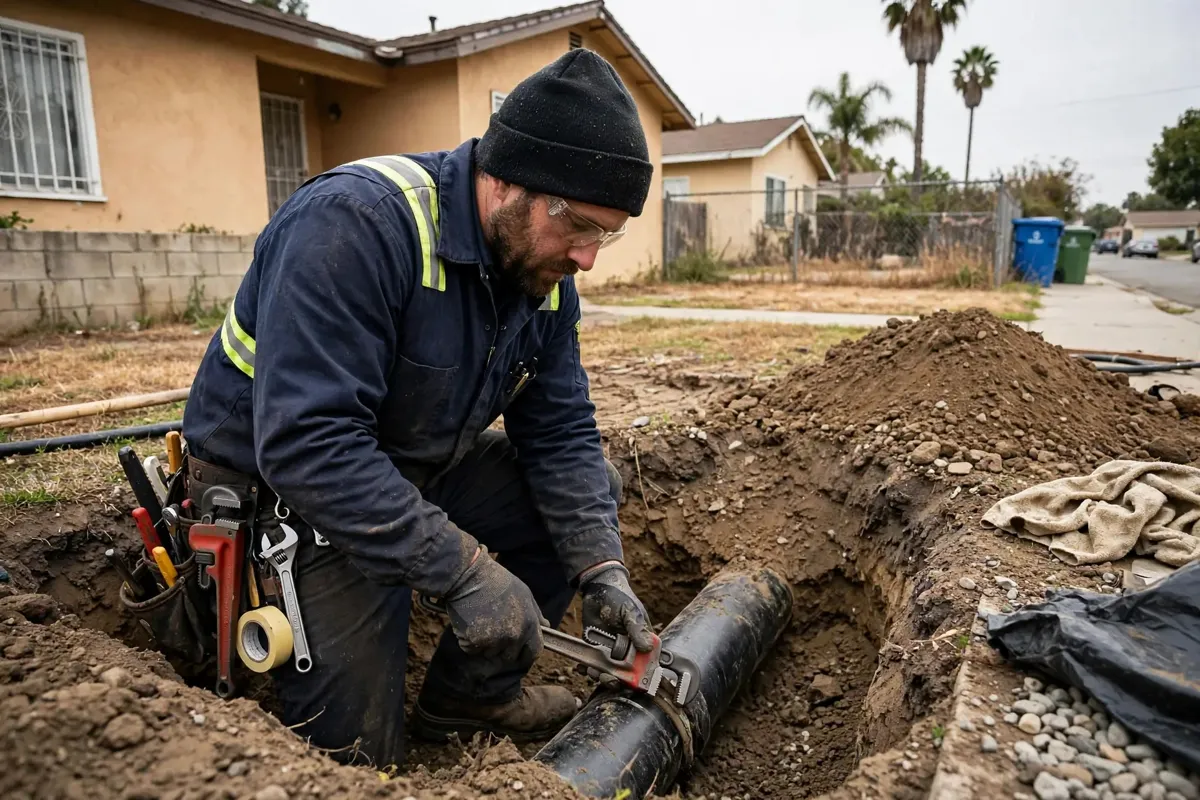
Both are urgent, but they ask for different first steps. For a burst, shut off the main water valve. For a backup, stop using water throughout the house so nothing more enters the line. Then call (123) 456-7890 and tell us which situation you have, so the crew arrives with the right equipment the first time.
After the immediate problem is controlled, we look for the pattern behind it. A burst in one galvanized fitting and a backup in a scaled drain often belong to the same story: a whole system at end of life. Naming that pattern honestly lets you plan the next steps instead of meeting them as surprises.
Hard Water Habits Inside Compton Pipe Runs
Mineral scale is a quiet partner in every Compton plumbing failure. Hard water deposits build inside galvanized and copper lines alike, but galvanized pipe suffers most because scale bonds with rust into a thick crust. Faucet aerators clog with flakes, showerheads spray unevenly, and water heaters fill with sediment that pops and rumbles as it heats.
Scale also lies to homeowners about their pipes. A line can feel solid from outside while its interior is nearly closed, and water pressure at the street can test perfectly while fixtures starve. Testing pressure at both the meter and the farthest fixture separates a supply problem from a house piping problem, and we run both checks on Compton visits.
What to Expect When Help Reaches Your Compton Home
A Compton visit follows a steady order. We control the water or the backup first, then diagnose with the tools the problem calls for: pressure gauges for supply issues, a camera for drains, listening equipment for suspected slab leaks. You see what the tools show, including camera footage of your own sewer line when that is the issue.
Then we lay out the options in writing level plain language: the repair that solves the immediate problem, the larger fix that solves the pattern, and what each involves in time and disruption. You choose. We complete the chosen work, test it under real conditions, and leave you with notes on the condition of the rest of the system.
Slab Leaks and Sewer Trouble in Older Compton Tracts
Many Compton homes sit on slabs, and the supply lines beneath them have been quietly corroding in damp soil for decades. A slab leak often reveals itself through the water bill before any floor feels wet, which is why an unexplained rise deserves a meter test: shut everything off, watch the meter, and if it still moves, water is escaping somewhere hidden.
For sewer lines, the Compton pattern combines cast iron under the home with clay or iron laterals to the street, all of it aged, scaled, and root prone. Camera inspection plus hydro jetting handles the majority of these cases, and when a section has failed structurally, the camera footage shows exactly which stretch needs replacement and which can stay.
From the Golf Course to the City Limits: Compton Coverage
We serve the whole of Compton across ZIP codes 90220 to 90222: the neighborhoods along Compton Creek and near the golf course, the streets around City Hall and the MLK monument, and the residential blocks reaching toward the borders with Lynwood, Paramount, and the Willowbrook area.
Compton sits within easy routing of our Carson base, and its grid of wide streets makes access simple in most conditions. Call (123) 456-7890 with your address, the age of your home if you know it, and a short description of the problem, and we will confirm the window and send a crew stocked for postwar plumbing.
Many Compton calls involve homes owned by one generation and maintained by another, or rental properties where tenants report the symptoms. We work with whoever is on site, keep owners updated by phone when asked, and leave a plain written summary of findings and repairs at the end of the visit.
PEX Repiping Plans for Compton Houses at the End of Galvanized Life
When a Compton home has leaking galvanized in more than one place, repiping stops being an upgrade and becomes the practical answer. New PEX supply lines replace the corroded network, restoring full pressure at showers and fixtures and ending the cycle of wall openings and patches that older systems demand year after year.
We plan Compton repipes around the household. Lines are staged so water returns to most fixtures each day, new shutoff valves go in at every fixture, and the old galvanized is isolated completely so it can never leak into a wall again. The final walkthrough covers the new layout and where every valve lives.
Warning Signs Compton Owners Can Spot Without Tools
You do not need gauges to catch most Compton plumbing trouble early. Rust colored water after a trip away, a shower that weakens when the washer runs, drains that slow in several rooms at once, damp soil along the side of the house, or a toilet that gurgles when the tub drains: each sign is specific, and each one points at a known failure in these older systems.
The mistake is waiting for certainty. By the time a sign becomes undeniable, the repair is usually bigger. Call (123) 456-7890 when the first sign appears, describe it, and let an inspection sort the serious from the simple while the choice is still yours to make on a calm schedule.
When a Compton Sewer Backup Starts: First Moves That Matter
A sewer backup in a Compton home announces itself at the lowest fixtures first: a tub or shower drain that fills with water from below, a toilet that bubbles when another fixture drains, or a floor drain in the laundry area that starts to weep. The first move is counterintuitive but vital: stop putting water into the system. Every flush and load of laundry adds volume that has nowhere to go.
Next, keep people and pets away from the affected water, turn off the water heater if the backup reaches it, and check whether the cleanout in the yard shows standing water, which tells us the blockage sits in the lateral rather than inside the home. If neighbors on your Compton street mention slow drains at the same time, say so when you call; shared street level problems do happen.
Call (123) 456-7890 and describe which fixtures are affected and whether the yard cleanout is full. That report tells the crew to lead with the camera and the hydro jetter rather than supply side tools. Most Compton backups trace to scale, roots, or a failed section of cast iron or clay, and the camera separates those causes in minutes instead of guesses.
Alameda Street to Atlantic: Compton Routes Our Crews Run
Compton is organized by its long corridors: Alameda Street running north and south with the rail lines, Atlantic Avenue and Long Beach Boulevard carrying traffic on the east side, and Rosecrans and Compton Boulevard crossing the grid. Our crews run these routes daily, and the housing just off each corridor has its own era and its own plumbing tendencies.
The blocks near the center and along Compton Boulevard hold some of the oldest homes in the city, where galvanized and cast iron are fully original in many cases. Farther out, postwar tracts repeat the same floor plans street after street, which means a crew that has repiped one home on a block already knows the pipe layout of its neighbors. That familiarity shortens diagnosis across Compton more than any single tool.
When you call, give us the corridor and cross street along with the address. It helps dispatch place you on the right route, and it helps the crew load for the era: galvanized fittings for the older core, slab leak gear for the tracts, camera and jetter whenever the drains are part of the story. Local routing is a small thing that saves real time.