
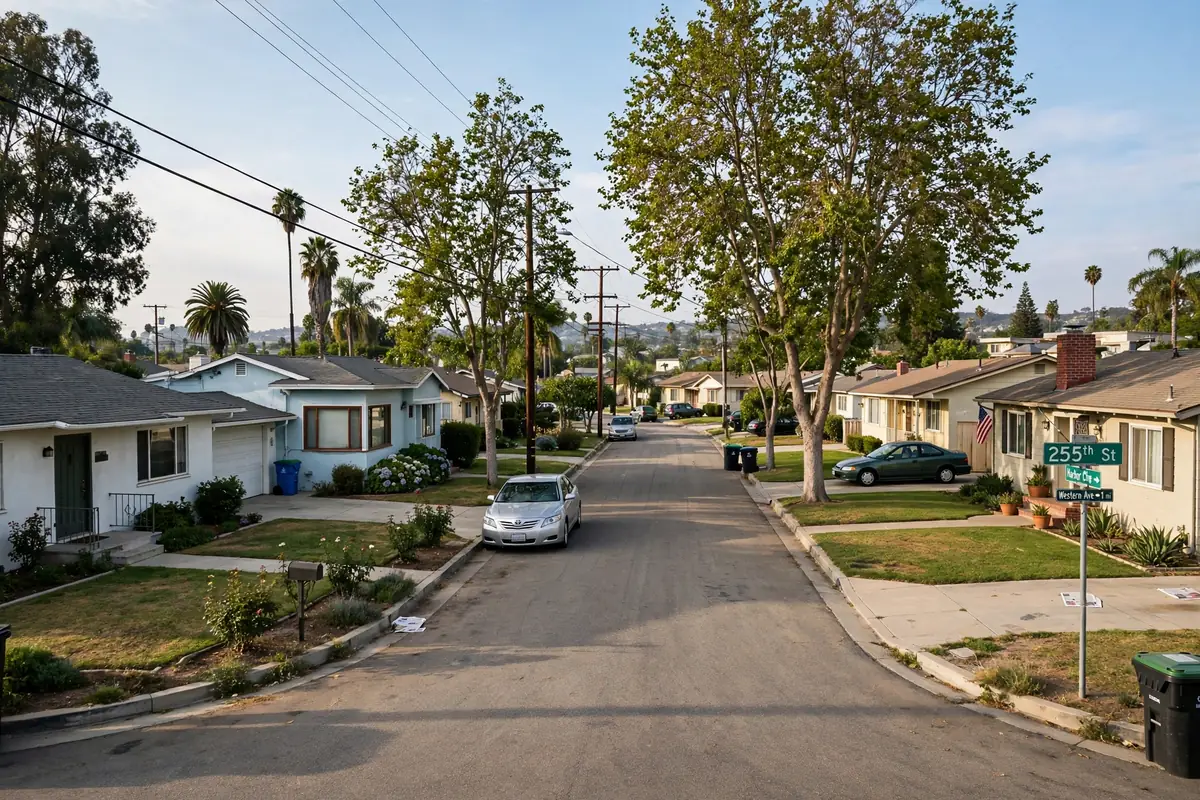
Postwar Tract Homes Fill Harbor City Lots
Harbor City was built out mainly in the postwar decades, when developers filled its compact grid with modest single story tract homes on tidy lots. The design was practical and uniform, which means the plumbing is uniform too: similar layouts, similar pipe routes, and the same original materials aging on the same schedule across whole blocks.
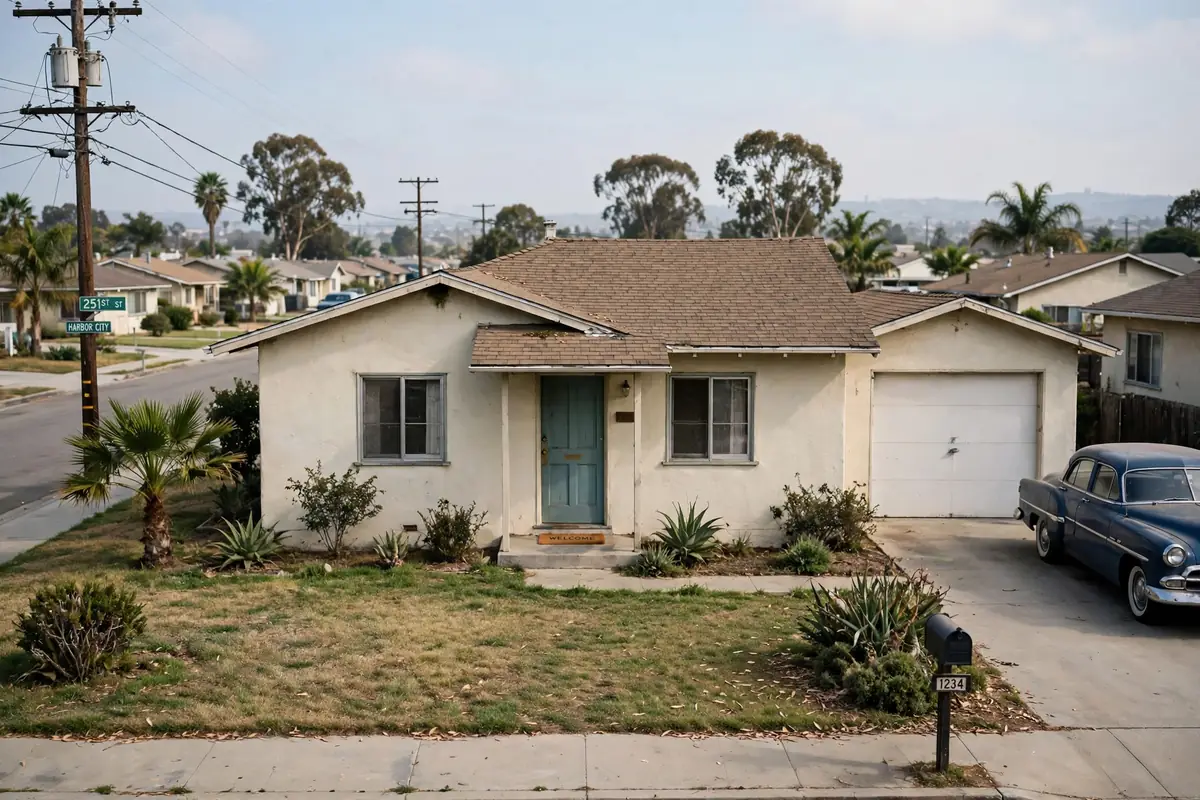
Uniformity cuts both ways. When one home on a Harbor City street develops pinhole leaks in its original copper, its neighbors with the same build year and the same pipe are usually not far behind. We see the pattern street by street, and it is why a leak here deserves a whole system look rather than a single patch.
The good news is that these homes are straightforward to work in. Layouts are predictable, access is usually reasonable, and repiping a tract home follows an efficient plan. Harbor City owners who decide to renew their plumbing get modern systems without the surprises that older, heavily remodeled houses can hide.
Ken Malloy Harbor Regional Park and the Streets Around It
Ken Malloy Harbor Regional Park gives Harbor City its green heart: a large park with a lake, open lawns, and room for the whole community to gather. The residential streets around it, and the neighborhoods stretching toward Pacific Coast Highway and Western Avenue, form the everyday Harbor City our crews drive week after week.
Narbonne High School, just at the Harbor City edge, is the other daily landmark for local families. Between the park, the school corridors, and the commercial strips, this is a settled, residential community where most homes are owner occupied and plumbing decisions are made for the long term.
Long term ownership suits honest plumbing advice. Harbor City homeowners tend to ask the right question, not just what fixes the leak, but what the rest of the system looks like and what a sensible plan is. Our inspections are built to answer exactly that, with findings you can act on this year or budget for the next.
Original Copper and Galvanized Lines at End of Life
Harbor City tracts were plumbed in a transition era: copper supply lines in many homes, galvanized still used in others, and sometimes both in the same house where additions tied in later. Both materials have now served their full expected lives. Copper thins and pinholes, galvanized rusts shut from inside, and the mixed junctions corrode fastest of all.
End of life does not announce itself with one dramatic failure. It whispers first: a pinhole here, a weeping joint there, pressure sagging a little more each year. Homeowners patch the whispers until a burst speaks up at full volume, often in a wall or under the slab where water does the most damage before it is found.
Our Harbor City inspections measure the whisper stage honestly. We check exposed runs, test pressure, and look at the joints where these systems fail, then give you a straight read on how much life the original lines realistically have left. That knowledge turns an emergency decision into a planned one.
The Failures Harbor City Owners Call About First
Pinhole leaks lead the Harbor City call list. Original copper develops tiny holes that spray a fine mist inside walls, soaking insulation and drywall long before a stain appears on the paint. By the time the homeowner calls, we often find the surrounding run peppered with thin spots, which changes the repair from a patch to a section replacement.
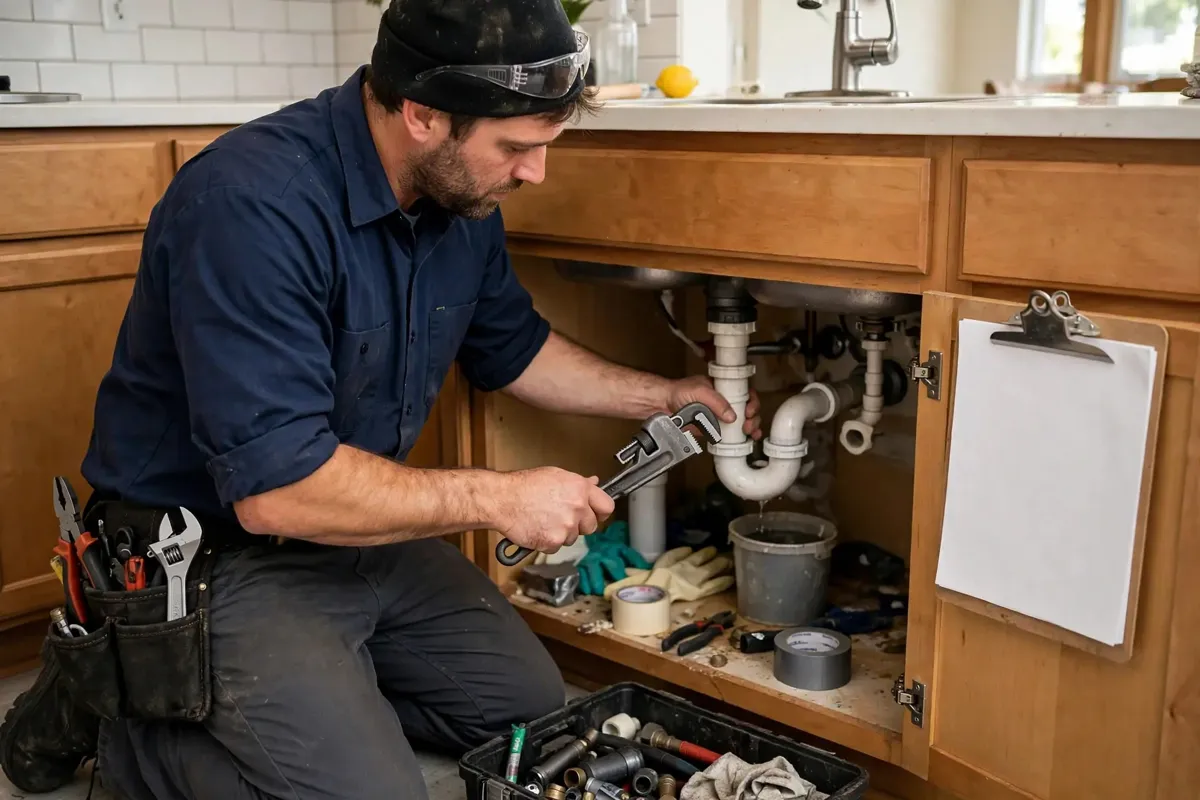
Slab leaks follow close behind, since many tracts ran supply lines under the concrete. The signs are warm flooring, a meter that will not sit still, and water appearing at the base of walls far from any fixture. We locate these leaks by sound and pressure testing, then weigh a spot repair against rerouting the line overhead.
Water heater connections and aging angle stops round out the regular calls. Both live under constant pressure and both corrode at their fittings, and both are simple to renew during any other visit. If your Harbor City home still has original valves at the sinks and toilets, replacing them is small work that prevents large messes.
Water Conditions Working on Harbor City Pipe From Inside
Harbor City water deposits mineral scale inside hot water lines and water heaters, and in older copper that scale creates the rough, pitted surfaces where pinhole corrosion takes hold. Galvanized sections suffer worse, collecting rust and scale together until the passage narrows and showers fade noticeably when a second fixture opens.
Pressure adds its own wear. When street pressure runs high or a regulator fails, the thinnest points in an end of life system take the punishment, and pinholes multiply. A pressure test is part of our standard Harbor City inspection because correcting high pressure can add real life to pipe that still has some left.
Your Harbor City Visit, Arrival to Walkthrough
A Harbor City visit starts at the shutoff. We stop the water, confirm the leak location, and check the connected runs, since in these tract homes a single line often serves a whole side of the house. Then we pressure test and inspect exposed pipe in the garage and under sinks to judge how widespread the wear is.
You hear the options before work starts: the focused repair, the section replacement, or the full repipe, with what each means for your home in plain terms. After the work, we restore pressure slowly, check every fixture on the repaired runs, and walk the home with you, pointing out any other spots that deserve watching.
Drains, Laterals, and Hydro Jetting in Harbor City
Harbor City drains mirror the supply side: cast iron under the homes and clay or cast iron laterals to the street, all of it postwar and all of it aged. Scale roughens the cast iron channel, roots invade the lateral joints, and the combination produces the slow drains and periodic backups that tract owners know too well.
Hydro jetting is the right reset for these lines. The jet scours scale and cuts roots, restoring the full bore of the pipe, and a camera inspection before or after confirms whether the pipe walls are holding. For many Harbor City laterals, jetting plus a root maintenance rhythm keeps the original line serving for years.
Narbonne High School and the 90710 Blocks We Serve
We cover the whole of Harbor City, ZIP code 90710, from the park side neighborhoods around Ken Malloy Harbor Regional Park to the streets near Narbonne High School, and the blocks along Pacific Coast Highway, Western Avenue, and Normandie Avenue that frame the community.
Harbor City sits between our Torrance, Lomita, and Wilmington routes, so crews pass through constantly. Call (123) 456-7890, give us your street and a description of the problem, and we will confirm a window and arrive stocked for postwar tract plumbing, including the copper and galvanized fittings these homes need.
Because the housing is so uniform, tell us the build era and any past repiping when you call. If your street has had work done by us before, we likely know your tract layout already, and that familiarity shortens the diagnostic part of the visit considerably.
A Clean PEX Path for Harbor City Repipes
Harbor City tract homes are among the most straightforward repipes we do. Uniform layouts mean PEX lines can run through the attic in clean, planned routes, dropping to each fixture with minimal wall openings. The old copper and galvanized come out of service entirely, and new shutoff valves go in throughout the home.
The result is a system with full pressure restored, no mixed metal corrosion points, and a layout documented for the next owner. For homes staying in the family, which is common in Harbor City, a repipe is the project that ends plumbing worry for the next generation of the household.
Small Signs Harbor City Homes Give Before a Big Leak
Before the big leak, Harbor City homes usually whisper. A faint stain that grows on a ceiling corner. A musty smell in one room that cleaning never fixes. Green or white crust forming at a pipe joint in the garage. A water bill creeping up by small amounts month after month. Every one of these has a plumbing cause worth finding.
The wisest response to a whisper is a look, not a wait. Call (123) 456-7890 and describe the sign, and we will check the runs behind it. In tract homes at this age, an inspection that catches the thinning section early converts a future flood into a scheduled afternoon of work.
Harbor City Burst at Midnight: A Calm Sequence That Works
A midnight burst in a Harbor City tract home feels dramatic, but the sequence that controls it is short and calm. Main shutoff first, at the front of the house or by the water heater. Low faucet open to drain the lines. Then a walk through the home with a flashlight, noting where the water started and where it is traveling, especially toward bedrooms where flooring damage grows quietly.
Tract floor plans work in your favor here: the wet wall is usually a bathroom or kitchen wall shared with the laundry or garage, and the runs are short. Buckets under the active drip, towels at the baseboards, and belongings lifted off the floor in the two rooms beside the wet wall cover most of the protection a Harbor City home needs while you wait.
Call (123) 456-7890 with your street near the park or the school side and whether the shutoff closed cleanly. Harbor City sits between our other routes, so a crew is usually close. Describe the build era if you know it and whether the pipes are original; that tells us to load copper pinhole repair stock or galvanized fittings before we leave, and the repair starts faster for it.
President Avenue to Frampton: Harbor City Blocks and Their Builds
President Avenue and Frampton Avenue are everyday Harbor City streets, lined with the postwar tracts and modest homes that define the community between the park and Pacific Coast Highway. Blocks like these look uniform from the curb, but their plumbing histories diverged long ago based on which owners repiped, which remodeled, and which patched along.
That divergence is why we never judge a Harbor City system by its street alone. Two identical floor plans can hold entirely different pipe: one renewed in PEX during a kitchen remodel that grew, the other still original copper with pinholes waiting in the hall wall. The inspection, not the address, decides the plan, and on these streets the inspection is quick because the layouts are so learnable.
There is a community benefit to that learnability. When our crews work several homes on the same Harbor City blocks over a season, the knowledge compounds: which laterals root first, which tracts ran galvanized instead of copper, where the cleanouts hide. Homeowners get the benefit of that compound knowledge every time a truck rolls onto President or Frampton with the right gear already aboard.