Professional slab leak repair for Carson and South Bay homes.
A slab leak runs under your floor where you cannot see it, wasting water and threatening the foundation the longer it flows. Carson Pipe Pros locates slab leaks with acoustic equipment and thermal imaging, then repairs them with the least invasive option that fits. Call (123) 456-7890 if you hear running water, feel a warm floor, or see the meter move with fixtures off.
Slab leaks announce themselves indirectly. A section of floor feels warm where a hot water line runs below, carpet or laminate stays damp along a wall, or the water meter keeps turning even though every fixture in the house is off. Some homeowners first notice the water heater firing more often, reheating water that is quietly escaping under the slab instead of reaching the taps.
Many Carson homes sit on concrete slab foundations with copper pipe routed underneath, a building style common across the South Bay during decades of growth. That copper has now aged in place, in contact with soil and concrete, and a leak under the slab is a predictable failure mode for this generation of housing. The signs deserve a prompt response, because the water has somewhere to go and it is going into the ground supporting your home.
Some slab leaks stay subtle for months. The only evidence may be a water bill that rises in steps, a faint sound in one quiet room at night, or a dog that keeps sleeping on one warm patch of floor in winter. Because the line is hidden, homeowners understandably look elsewhere first, to irrigation, toilets, and the water heater, and a methodical meter test that eliminates those ordinary causes is what earns an under slab leak its place on the list. Each suspect eliminated above ground makes the eventual acoustic survey faster and its conclusion far more certain for everyone involved.
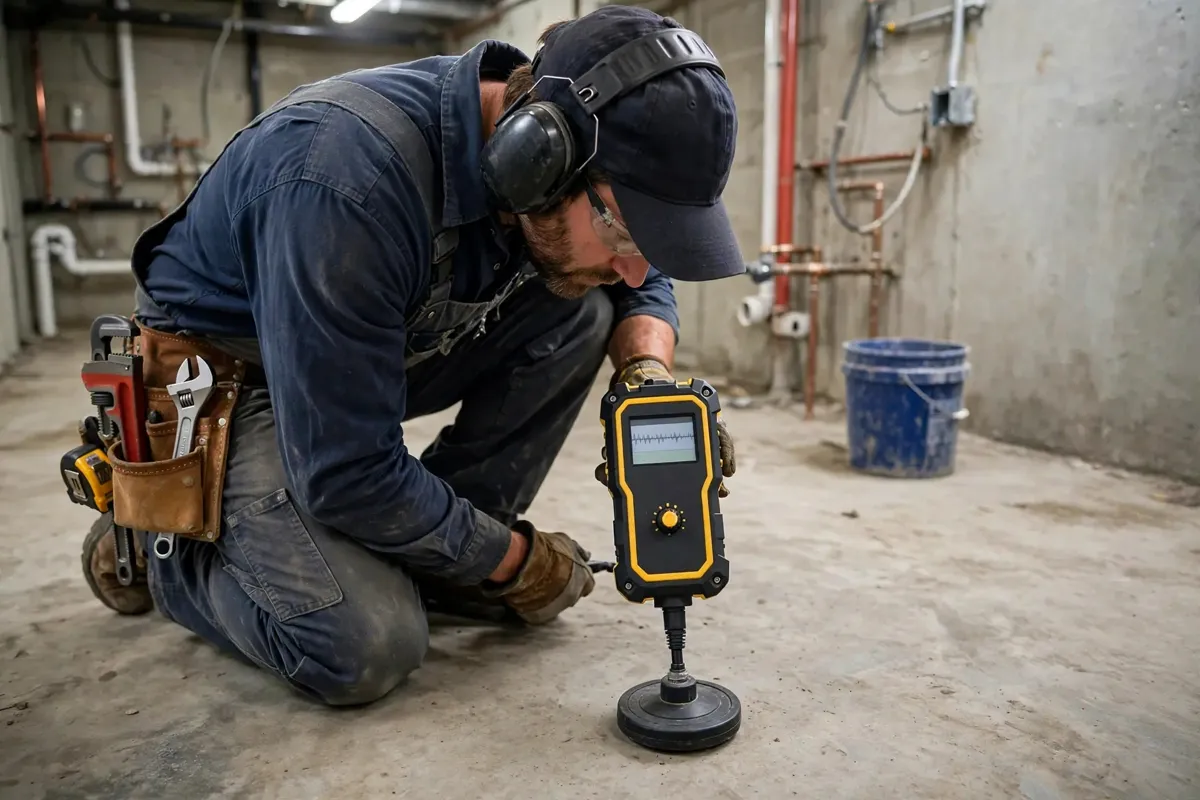
Breaking concrete on a guess is the old way, and it is a poor one. Modern location starts above the floor: an acoustic listening device follows the sound of pressurized water escaping under the slab, thermal imaging reveals the warm pattern of a hot line leak spreading through the concrete, and a moisture meter maps dampness in the flooring and walls above. Together they narrow the leak to a small target area.
Pressure testing supports the search. By isolating hot and cold sides and using a hydrostatic pressure test on each, the technician confirms which line is leaking before pinpointing where. That sequence matters, because a slab opening made in the wrong place helps no one. When you call (123) 456-7890, share which clues you noticed first, since a warm spot, a sound, and a meter reading together often shorten the location work considerably.
Locating also means reconstructing how the home was plumbed. Lines under a slab rarely run in straight guesses; they follow fixture groups, and the position of bathrooms, the kitchen, and the water heater sketches the likely routes before instruments confirm them. In Carson tract homes, similar floor plans repeat across a street, so experience with neighboring layouts genuinely informs the search, though instruments always have the final word. Valves are exercised, the main shutoff is confirmed, and hot and cold systems are tested separately, narrowing a whole house of possibilities to one run and then to one marked square of flooring.
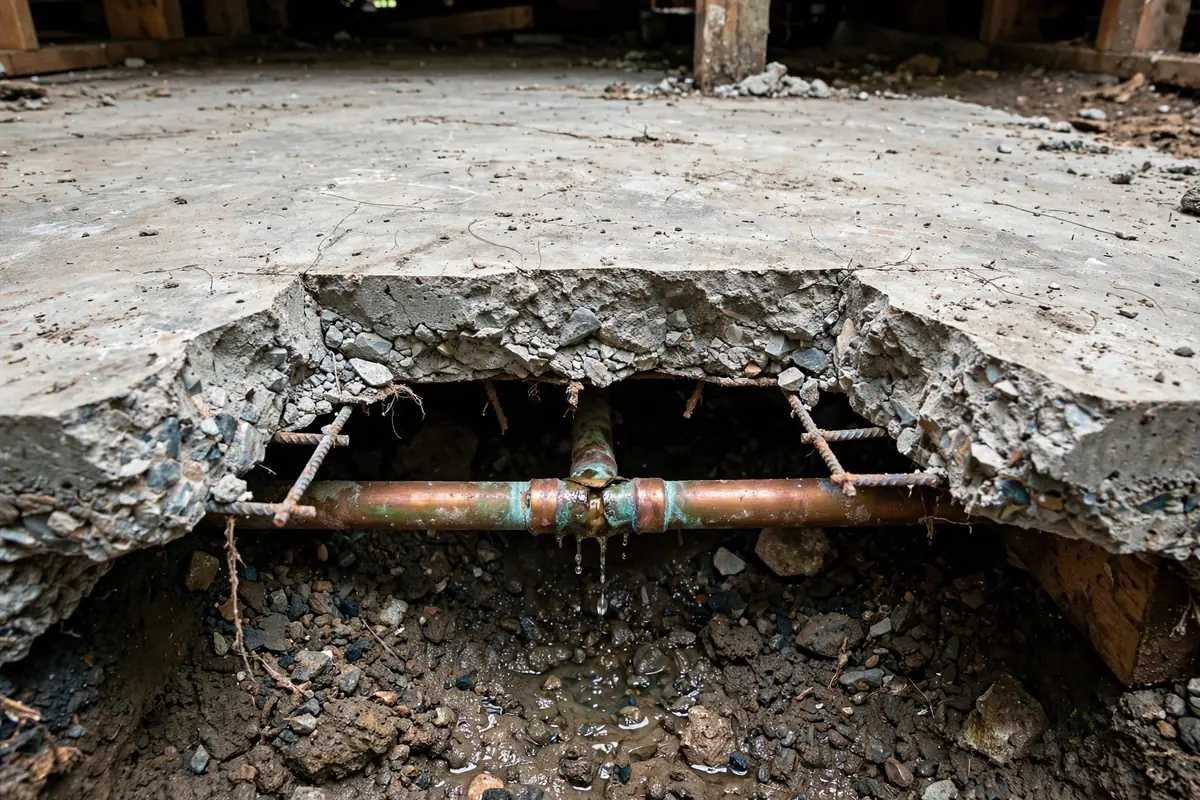
Once located, most slab leaks offer more than one repair path, and the right choice depends on the pipe condition and location. A spot repair opens the slab at the leak, replaces the failed section of copper pipe, and restores the concrete. It fits well when the surrounding line is sound and the leak is a single isolated failure rather than part of a pattern.
When the line has failed before or tests poorly along its run, rerouting is often wiser: the under slab section is abandoned, and a new line, often PEX, runs through walls or the attic to the same fixtures. Rerouting avoids further slab openings and removes that whole underground section from service. Either way, the goal is the same: stop the leak, protect the foundation from further soil washout, and leave the system pressure tested and verified.
A spot repair, when chosen, is careful work in a small footprint. The marked section of flooring and concrete is opened, the failed copper is cut out with sound pipe on both sides of the new joints, and the repaired line is pressure tested before any concrete returns. The opening is then restored in kind, with the slab patched and the floor ready for its finish material. Choosing between that path and a reroute is a judgment about the whole line, not just the hole: one failure in otherwise strong pipe favors the spot repair, while repeated failures argue for retiring the underground run.
How serious is a slab leak for a foundation? The water itself is the concern. A pressurized leak under a slab washes fine soil away from beneath the concrete over time, creating voids where support used to be. Left long enough, that undermining can contribute to settling, cracked tile, sticking doors, and stress on the very pipes routed through the slab, which can produce the next leak.
Moisture is the second problem. Water migrating up through the slab damages flooring from below, feeds mold at baseboards and wall bases, and keeps the ground under the home saturated around the foundation. Homes in Carson, Torrance, and Long Beach on slab construction share this vulnerability, and in all of them the timeline matters: a leak found in its first weeks is a plumbing repair, while a leak that ran for months becomes a flooring and foundation conversation as well.
The encouraging part is that prompt repair usually stops the progression entirely. Once the leak is fixed and the line passes a pressure test, the soil stops washing away and drying can begin. If your meter moves with everything off, do not wait for floor damage to confirm what the meter already told you. That early call to (123) 456-7890 is the cheapest decision in the whole process.
What causes a slab leak under a house? Copper pipe under a slab lives in a tough environment. Soil chemistry and hard water can corrode it from outside and inside, concrete contact abrades the pipe as the slab and line expand and contract at different rates, and a kink or dent left from original installation becomes a weak point that pressure works on for decades until it opens.
Pressure itself plays a role. A failed water pressure regulator letting household pressure run high stresses every solder joint and thin spot in the system, including the runs no one can see under the floor. Ground shifting, even the subtle settling common in South Bay soils, bends rigid copper slightly at slab entry points, and those entry points are frequent leak locations for exactly that reason.
Prevention is limited once pipe is under concrete, but awareness helps: keep household pressure in the proper range, treat meter movement and warm floors as early warnings, and consider the pattern if a second under slab leak appears. Two leaks in the same line often justify rerouting that line overhead for good, rather than opening the slab a second time in a new place.
Life after a slab repair includes a short season of attention. Keep the meter habit for a few weeks, reading it when the house is quiet, and glance at the repaired area and the nearest baseboards as floors dry fully. Soil under the slab needs time to dry as well, and flooring over a previously wet section should be checked before new finishes go down. None of this is burdensome, and it converts anxiety into information. If readings stay clean and floors stay dry, the repair has proven itself in the only way that matters, in daily use over time in your own home.
Straight answers before you call.
Describe what your pipes are doing and we will point you to the right next step.
Call (123) 456-7890Common signs are a warm or damp floor area, the sound of running water with fixtures off, a meter that moves constantly, and a water heater that cycles more than usual.
No. A spot repair opens a small section at the located leak, and rerouting a new line through walls or the attic can avoid slab work entirely when the pipe condition calls for it.
An under slab leak can waste a large amount of water invisibly. Meter and pressure testing confirm whether water is leaving the system underground.
Yes. Moisture rising through the concrete damages laminate, hardwood, and carpet padding from below, and it can reach baseboards and wall bases if it runs long enough.
Escaping water washes soil from under the slab, risking settling and further pipe stress, while moisture damage spreads. Early repair keeps the job focused on plumbing.
Burst pipes shut off, located, and repaired fast, day or night.
Hidden leaks found with acoustic and thermal equipment, no guesswork.
Water extraction, drying, and cleanup after a pipe failure.
Camera inspection and repair for cracked, root filled, and collapsed sewer lines.
Call now and describe what is happening. We will take it from there.
Call (123) 456-7890