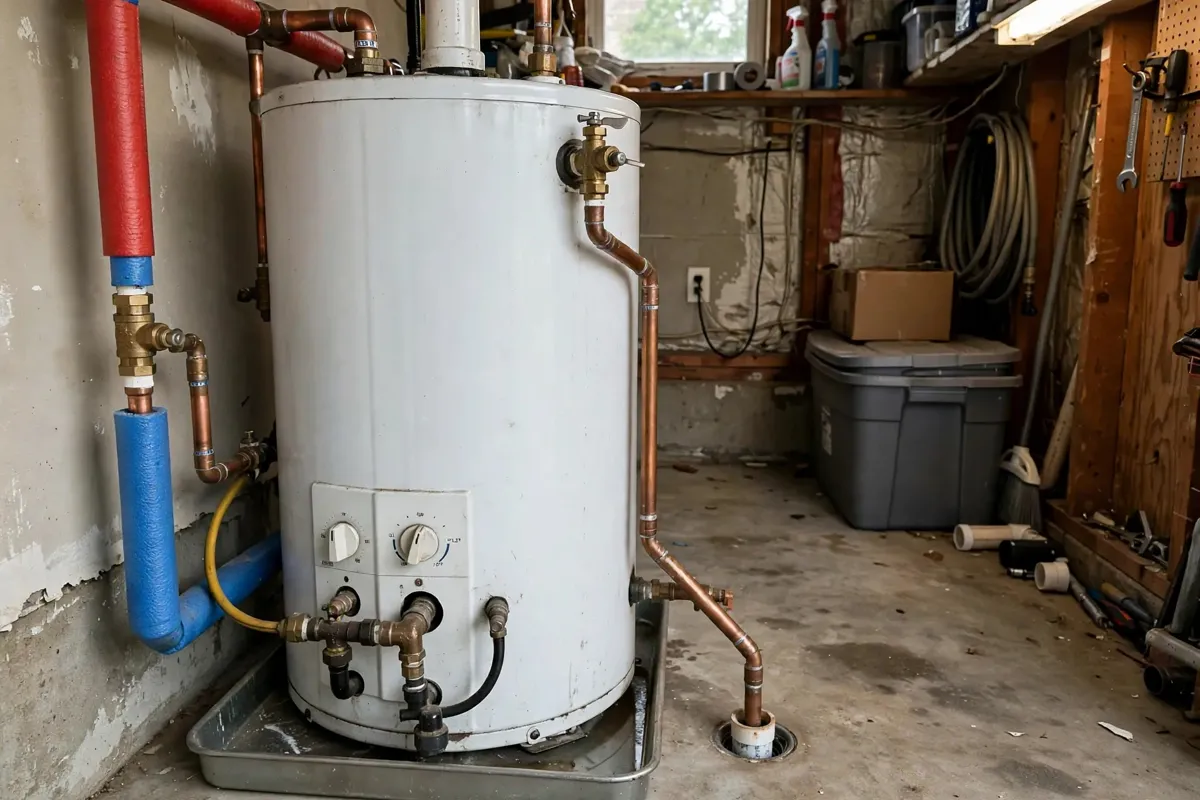
Professional water heater repair for Carson and South Bay homes.
Cold showers, rusty hot water, and a tank that rumbles or leaks are all solvable once the failing part is identified. Carson Pipe Pros diagnoses tank and tankless water heaters in Carson and the South Bay, checking heating, venting, and water connections as one system. Call (123) 456-7890 when hot water fades, runs out early, or stops entirely at your home.
Water heaters rarely fail without rehearsal. Hot water that runs out faster than it used to, a shower that cools halfway through, popping or rumbling sounds from the tank, or water that comes out rusty on the hot side only are all early reports from a system under stress. Each symptom maps to a short list of causes a technician can test in one visit.
In Carson garages and utility closets, most heaters are tank style gas or electric units, with tankless systems growing more common in remodeled South Bay homes. The diagnosis differs by type: tank units revolve around burners or elements, thermostats, and sediment, while tankless units add flow sensors, scale buildup on heat exchangers, and venting and gas supply checks. Knowing which you have when you call helps the visit start in the right place.
Usage patterns belong in the diagnosis too. A heater that kept up for years may fall behind because the household changed, with more showers, a new soaking tub, or laundry and dishes running in the same hour, rather than because the heater itself declined. Sorting demand problems from equipment problems prevents replacing parts on a healthy unit that is simply being asked for more than its recovery can supply at peak times. In multigenerational South Bay homes, where morning routines stack tightly, that distinction decides whether the answer is a repair, a settings and usage adjustment, or a planned capacity conversation for later.
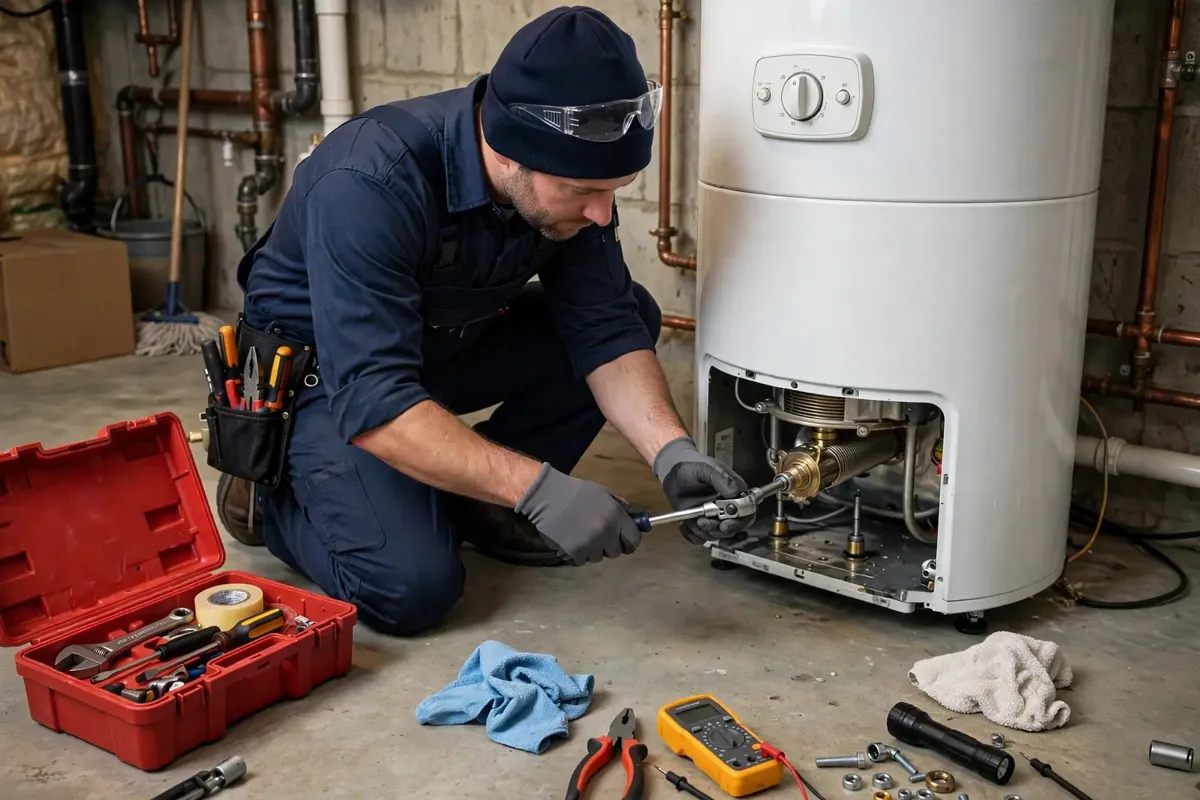
South Bay hard water leaves its mark inside every tank. Minerals settle as sediment on the bottom, insulating the water from the burner or element, causing the rumbling and popping sounds homeowners hear, and forcing the heater to run longer for the same hot water. Over years, that extra heat stress shortens tank life and can crack the glass lining that protects the steel.
Inside the tank, a sacrificial anode rod is quietly corroding so the tank does not. Once that rod is consumed, corrosion turns to the tank walls themselves, and rusty hot water often follows. Checking sediment level and anode condition during a repair visit answers the bigger question behind many heater calls: whether this unit has healthy years left, or whether each repair is being made on a tank that is already near its end.
Flushing a tank is simple in concept and revealing in practice. Draining several gallons through the drain valve shows how much sediment the tank is carrying, and heavily loaded water that runs gritty or discolored confirms the rumbling diagnosis at once. Heaters that have never been flushed in hard water service may have drain valves clogged with that same sediment, another finding that speaks to condition. Where the tank is sound, restoring a flushing rhythm, checking the temperature and pressure relief valve, and confirming the anode rod schedule together form the maintenance core that separates a heater cared for from one merely endured.
Tank heaters most often need a failed heating element or thermostat on electric models, or a thermocouple, gas control, or burner service on gas models. A leaking temperature and pressure relief valve, a dripping drain valve, or a supply line and compression fitting weeping at the top connections are also common, and each is a defined repair when the tank itself is sound.
Tankless heaters fail differently. Hard water scale insulates their compact heat exchangers until the unit overheats, short cycles, or shuts down with an error code, and descaling restores many of them. Venting faults, gas supply issues, and flow sensor problems round out the usual list. Whether tank or tankless, the pattern is the same: test the reported symptom to its component, repair that component, and verify full hot water delivery at the fixtures before leaving.
Safety checks ride along with every heater repair, because water heaters combine water, heat, and either gas or high voltage in one appliance. Gas units get venting and combustion air attention, since a blocked or separated vent can spill exhaust into a garage or closet, and their gas control and burner assembly are observed through a full firing cycle. Electric units get element and wiring checks with power safely isolated. The shutoff valve on the cold supply line and the condition of the seismic strapping common in Southern California installations are verified as well, small details that matter greatly on the one day they are needed.
Why is my water heater leaking from the bottom? The answer decides repair or replacement, so it is traced carefully. Water at the base may come from the drain valve, from a fitting or supply line above that runs down the tank side, or from the tank itself. A tank leaking through its own steel has reached the end, because the vessel cannot be patched reliably once corrosion opens it.
Condensation can also imitate a leak on gas units during heavy use, pooling under the heater without any failure at all. A technician dries the area, watches where moisture first reappears, and checks each fitting, valve, and the relief line before concluding the tank is gone. That patience matters, since replacing a sound heater over a loose compression fitting helps no one.
If your heater is leaking, shut off its water supply at the valve on the cold line above the unit, and for gas models leave the gas control as it is unless you smell gas. Keep the area clear and call (123) 456-7890 with the heater age if you know it, where the water appears, and whether hot water still works. Those details tell the technician whether to load repair parts or plan for a replacement conversation.
How long should a water heater last in Southern California? Tank heaters commonly serve around a decade, give or take years in either direction, while tankless units generally last longer when they are descaled on schedule. Hard water is the main local variable: the same heater ages faster on mineral heavy water without flushing than one maintained in softer conditions.
Maintenance genuinely moves the number. Flushing sediment from a tank, checking the anode rod before it is fully consumed, and keeping the area around a gas heater clear for proper combustion air all extend service life. Neglected units in Carson, Gardena, and Long Beach homes often fail early from sediment stress and tank corrosion that routine attention would have slowed.
When a repair decision comes up on an older unit, age plus condition should drive it together. A young heater with a failed element is an easy repair. An older tank with rusty water, heavy sediment sounds, and a weeping base is telling you its remaining life is short, and putting the repair effort toward a planned replacement, on your schedule instead of during a cold water emergency, is usually the wiser path.
Planning a replacement before failure has practical advantages worth naming. A planned change allows the new unit to be matched to household demand, venting, and space, with the water shutoff window scheduled and the old unit drained without urgency. Emergency replacements after a tank rupture add water damage cleanup to the same day and narrow every choice. Homeowners who know their heater age, keep its area accessible, and act on rusty water or heavy sediment sounds early rarely face the emergency version, and that foresight is the real lesson inside every heater repair that arrives a little too late to save the tank.
Straight answers before you call.
Describe what your pipes are doing and we will point you to the right next step.
Call (123) 456-7890Sediment filling the tank, a failed lower element or burner issue, or a thermostat problem are common causes. Diagnosis tests each one rather than guessing from the symptom alone.
Rumbling and popping usually mean sediment has built up on the tank bottom and is trapping heat. Flushing may help if the tank is otherwise sound, and the visit checks its overall condition.
A leaking tank can worsen suddenly, so shut off the cold water supply valve to the heater and call (123) 456-7890 promptly. Keep clear of water near electrical connections.
Often yes. Descaling, sensor replacement, and venting or gas supply corrections restore many tankless units, especially when error codes are reported accurately when you call.
That pattern points inside the heater: a consumed anode rod and tank corrosion are the usual causes. It is a sign the tank condition needs prompt evaluation.
Burst pipes shut off, located, and repaired fast, day or night.
Hidden leaks found with acoustic and thermal equipment, no guesswork.
Water extraction, drying, and cleanup after a pipe failure.
Camera inspection and repair for cracked, root filled, and collapsed sewer lines.
Call now and describe what is happening. We will take it from there.
Call (123) 456-7890